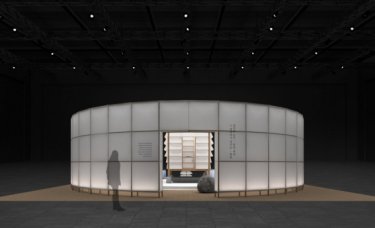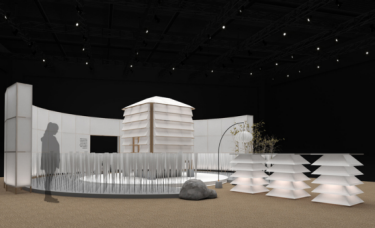
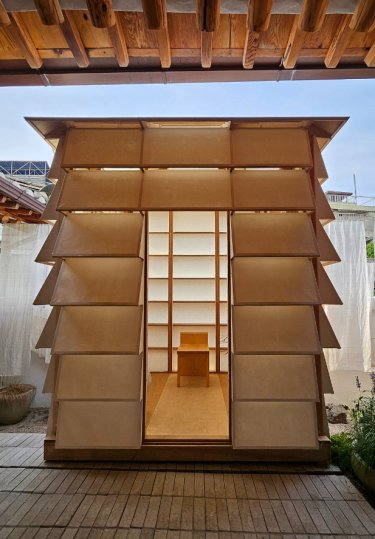
A nongmak is a small, temporary structure traditionally used in agricultural settings to store farming equipment, process harvested crops, or provide a place to rest during farm work. But what does a nongmak mean in today's urban environment, far removed from its agricultural roots? Could it become a personal retreat—a space to reconnect with ourselves, preserve what matters most, and find rest amid the routines of everyday life?
The 2024 Trend Feature, “Urban Farm Hut: House of Paper,” reimagines the nongmak as a personal sanctuary within the city. As urban dwellers spend much of their time in enclosed environments, personal spaces become increasingly limited, and opportunities to connect with nature grow scarce. Amid the pressures of repetitive daily routines, finding moments of emotional balance and genuine relaxation has become more challenging. This exhibition explores how a space can offer an opportunity to reconnect with one's identity and experience rest on one's own terms.
At the heart of the exhibition is hanji, traditional Korean paper historically used in hanok, Korea's traditional houses and an important part of the country's architectural heritage. By presenting an environmentally conscious house made of hanji, the exhibition explores the material's potential beyond conventional construction applications. It highlights hanji's sustainability as an interior material that can promote emotional well-being and create a comfortable, aesthetically pleasing environment.
The space also incorporates the sense of contemplation and tranquility found in nature, inviting visitors to reconsider what an urban sanctuary can mean and experience a moment of respite within the city.
Exhibition Director Hyo-seung Jin, who has developed projects exploring the contemporary interpretation of traditional Korean crafts since 2006, brings his distinctive perspective to this year's Trend Feature. Discover how his approach takes shape through hanji and how this traditional material can be transformed into a space dedicated to rest and reflection.